What size space heater do you actually need?
The rule of thumb is 10 watts per square foot — but ceilings, windows and outside walls move that number more than most guides admit. Here is how to size a room properly.
October 25, 2026 · 7 min read · 620 words
The short answer: about 10 watts per square foot for a room with normal insulation and an 8-foot ceiling. A 150 sq ft bedroom wants 1,500 W. A 250 sq ft living room wants 2,500 W, which is more than any plug-in heater in the US can deliver — those top out at 1,500 W because that is what a standard household circuit will carry continuously.
So the honest version of the answer has two parts: how much heat the room needs, and what a single outlet can actually give you.
Start with the room, not the heater
Measure the floor area. Then adjust:
- Ceilings above 8 feet — add 25% for every two extra feet. Warm air sits at the ceiling, which is why a tall room feels cold at sofa height no matter what the thermostat says.
- Outside walls — one is normal, two or more means add 10–15%.
- Single-pane or old windows — add 10%. Glass is the weakest part of the envelope by a wide margin.
- A room over a garage or a crawlspace — add 20%. You are heating the floor as much as the air.
A 12 × 14 bedroom with one outside wall is 168 sq ft, so 1,680 W before adjustments. One outside wall and an 8-foot ceiling keeps it near 1,500 W — a single full-size heater covers it. The same footprint over an unheated garage needs more than one unit, and no amount of shopping will change that.
What 1,500 W actually buys
Every plug-in heater sold in the US sits at or under 1,500 W on its high setting. That is not a marketing coincidence — it is the practical ceiling for a 15-amp household circuit that also has to tolerate a continuous load. Two consequences follow from it:
- A heater rated for "up to 300 sq ft" and one rated for "up to 150 sq ft" usually push the same wattage. The difference is the fan, the oscillation and the housing, not the element. Coverage figures on the box are marketing; the wattage on the rating label is the fact.
- Two 1,500 W heaters on one circuit will trip the breaker. Put them on different circuits, in different rooms, or accept one at a time.
Matching the shape to the room
Wattage tells you whether a heater can warm a room. Shape tells you whether it fits where you need it.
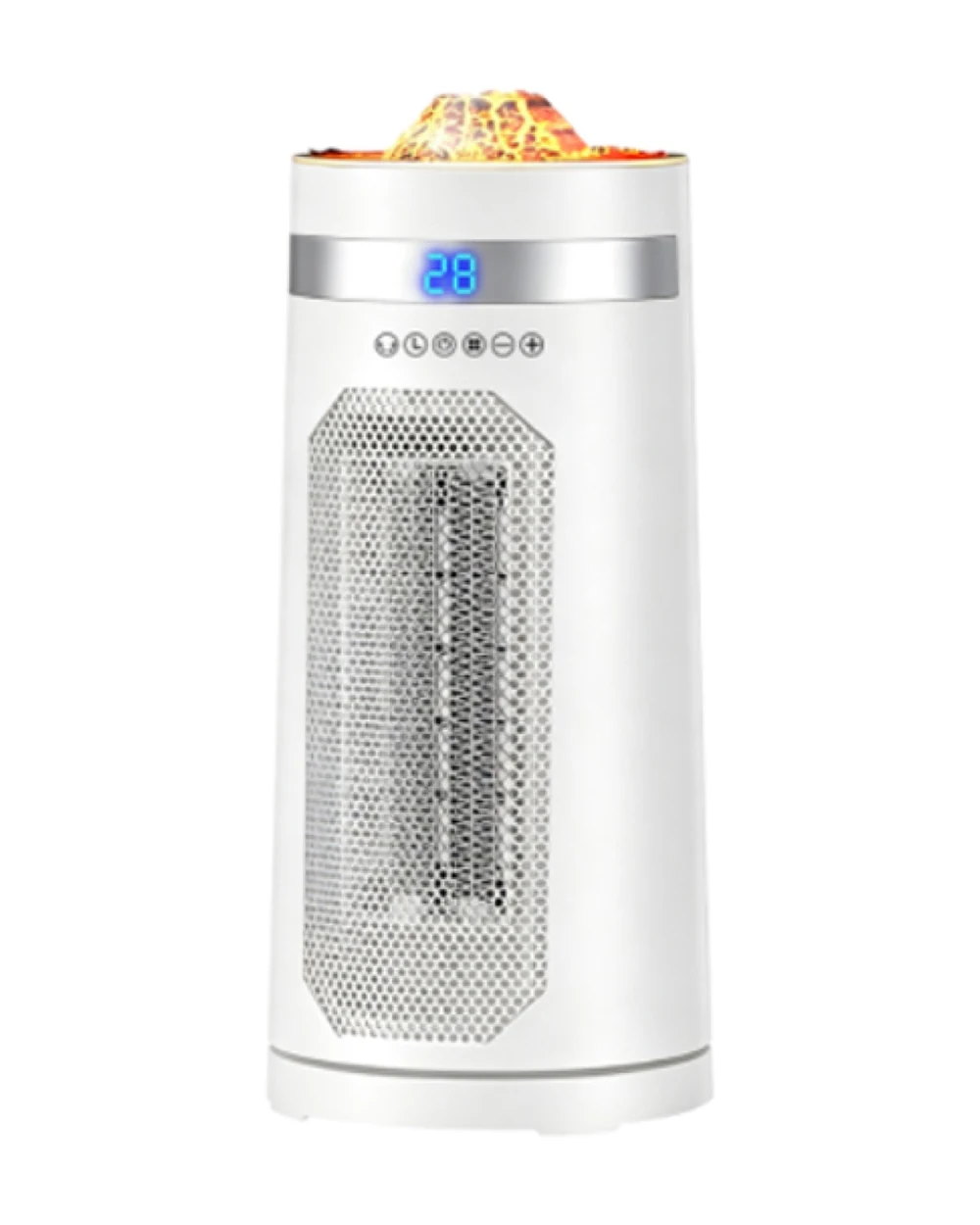
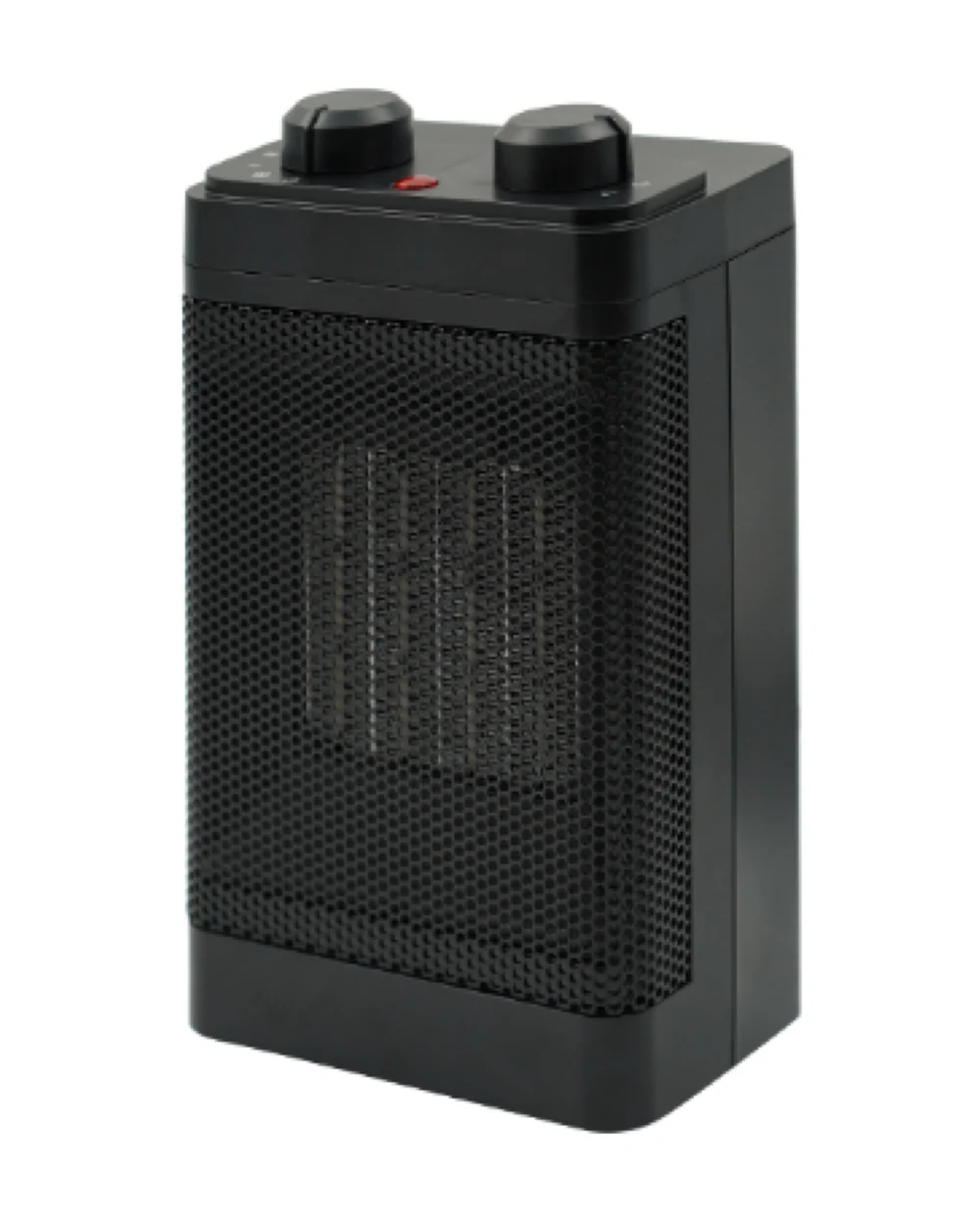
- A tower suits a bedroom or a living room. Full-height outlet throws air across the room rather than straight up, and the small footprint fits beside a sofa or a dresser.
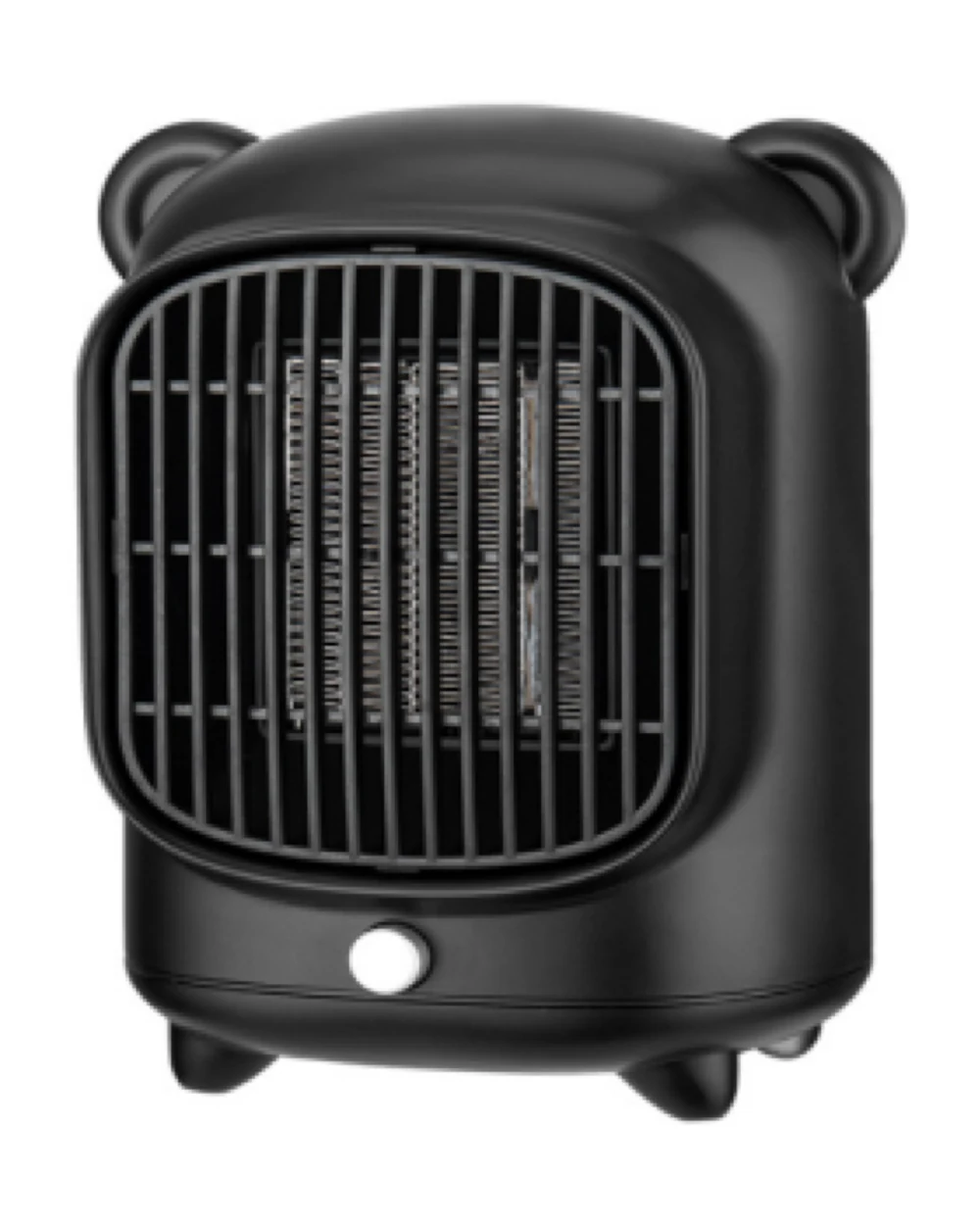
- A desktop box suits a home office, a kitchen counter or the footwell under a desk. It is not trying to heat the room — it heats you.
- A reflector or "sun" style heater heats objects and people in front of it rather than the air. Best for a garage bench or a drafty entry where the air volume is hopeless but you only need your hands warm.
- A wall panel is the answer when floor space is the constraint — a hallway, a small bathroom, a mudroom.
The number to check before you buy
Look at the rating label, not the box copy. If two models cost differently but carry the same wattage, you are paying for the fan, the controls, the oscillation, the remote and the housing — all of which are worth paying for, but none of which add heat.
If the label says less than 1,500 W on high and the price is the same as a 1,500 W unit, that is the trade to walk away from.
Referenced in this guide
Keep reading