A fire on the wall in October, without heating the room
The flame effect on these heaters runs independently of the element. That sounds like a gimmick until you realize it makes a fireplace usable for eight months instead of four.
October 22, 2026 · 5 min read · 531 words
Most people buy an electric fireplace for January and then switch it off in March, because the thing it is good at — pushing 1,500 W of warm air into a room — is the thing you stop wanting the moment the weather turns.
The useful detail is that on every flame model here, the flame is a separate circuit from the heat. An LED array behind a diffuser, a rotating reflector, and a fan that only spins when you ask for warmth. Run the flame with the element off and the unit draws a few watts — less than a nightlight with any ambition.
That changes what the thing is for.
What it is actually good at
- September through November, and March through May. The months when a room is not cold enough to justify heat but is flat and dim at 6 pm. This is where a flame unit earns its floor space.
- A room that runs warm. If your living room is already the warmest one in the house because of a sunny window or a shared wall with the boiler, a fireplace that can produce fire without heat is the only version that makes sense.
- A rental. No venting, no chimney, no gas line, no landlord conversation. Plug it in.
- The two minutes before guests arrive. A fireplace is a piece of furniture that happens to also work as a heater. Most of the value is visual.
What it is not
It is not a real fire, and it is not trying to fool anyone at close range. The flame is LED light behind a diffuser with a moving element in front of it. From across a room in the evening it reads as fire. From two feet away, in daylight, it reads as a screen. If that trade bothers you, buy a plain tower and spend the difference elsewhere.
It is also not a primary heat source for a genuinely cold room. The flame models here carry the same 1,500 W element as the plain towers, so the heat is real — but a fireplace surround is a piece of furniture with a fixed footprint, and a tower will usually throw air further.
Picking between the shapes
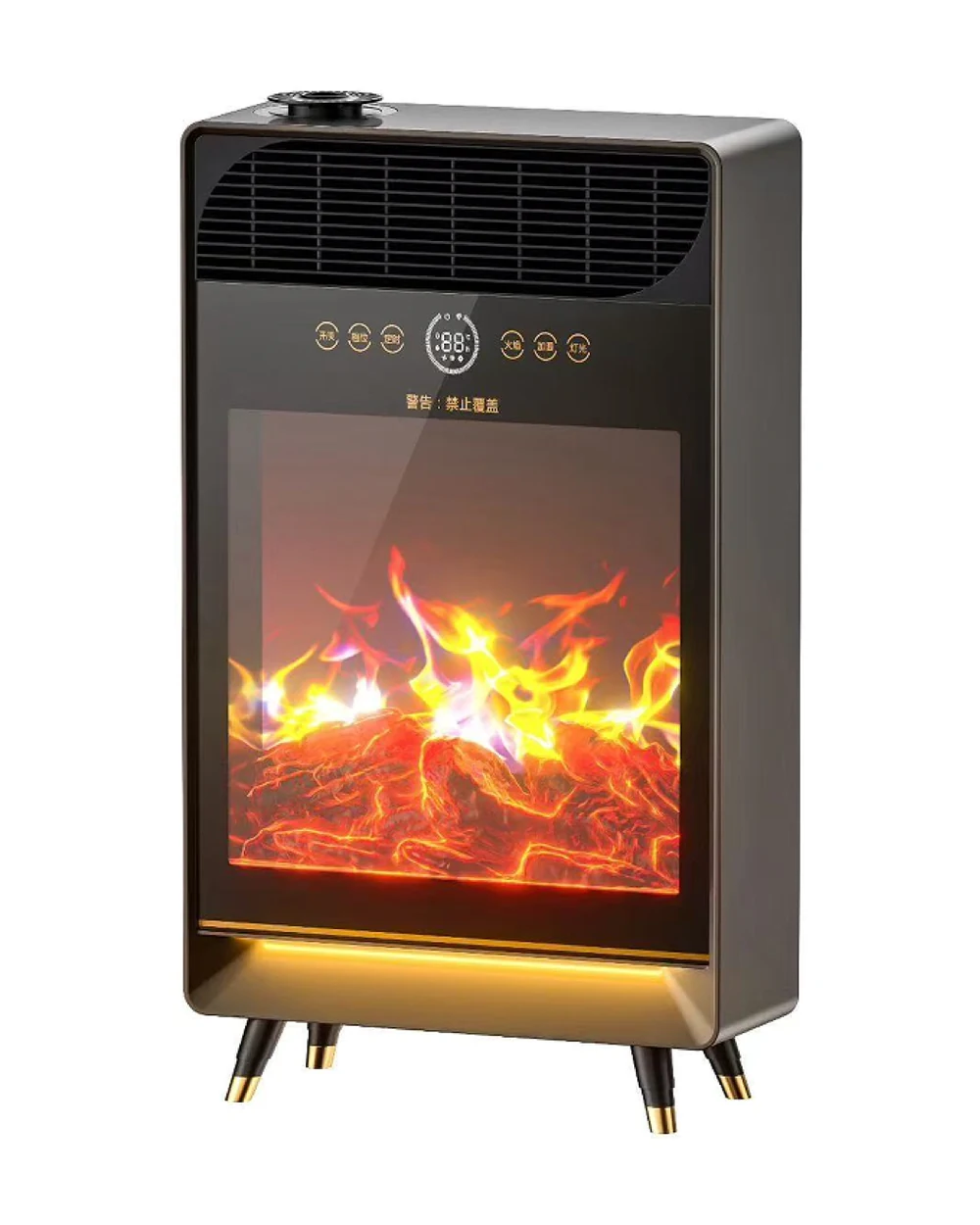
- A full surround or stove is furniture. It belongs against a wall where a fireplace would go, or in the corner of a room that needs an anchor.
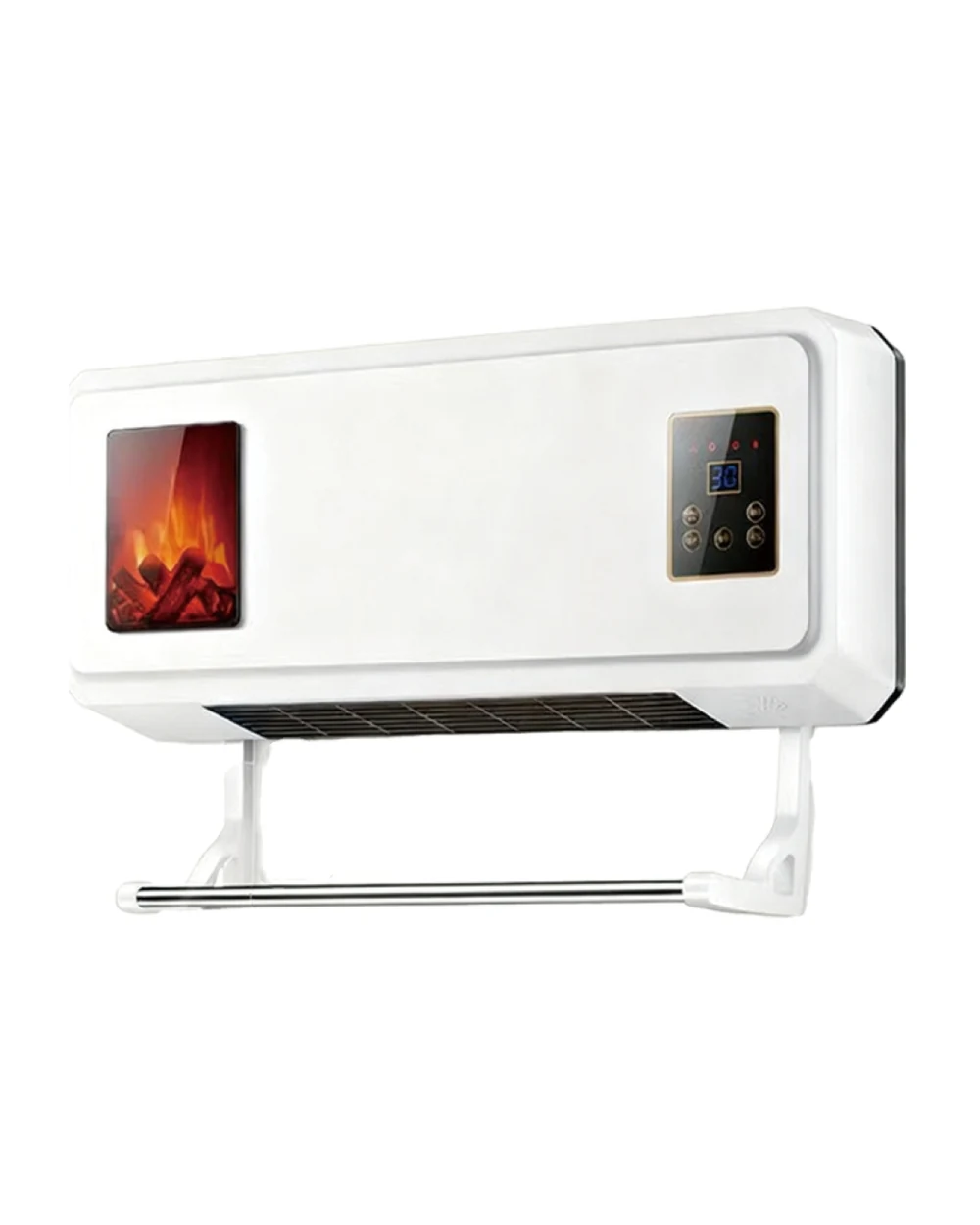
- A wall-mounted flame panel is for a room where the floor is already spoken for — a hallway, a small bedroom, above a console table.
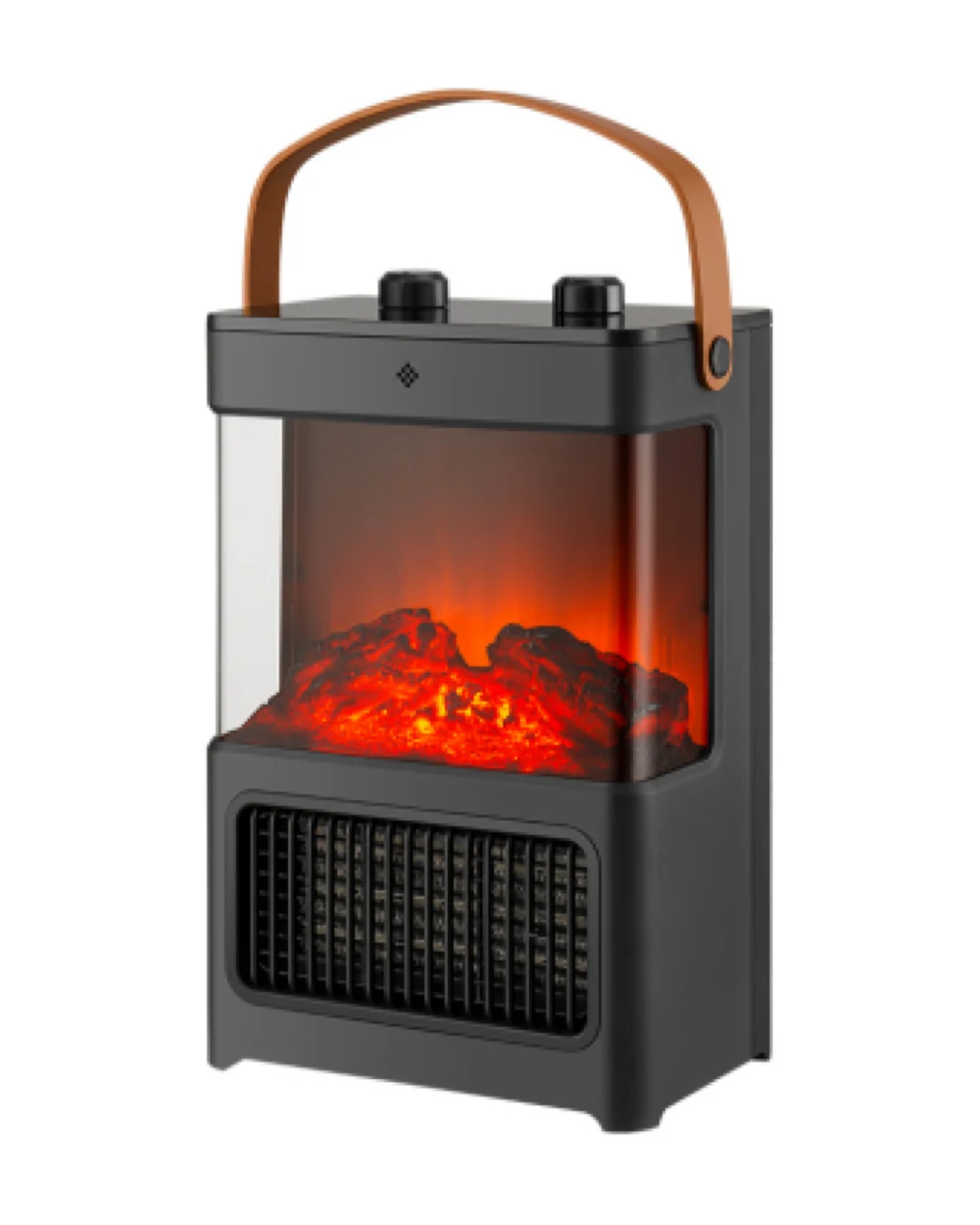
- A tabletop firebox is the smallest way to get the effect. Put it on a counter or a side table, not on the floor, where a fire at knee height just looks wrong.
One thing to check
Some flame units will not run the flame without the blower, which defeats the whole point. On the models listed here the flame runs with or without heat — the product page states it under Flame effect in the specifications. If a listing says anything other than "runs with or without heat," assume the fan is always on.
Referenced in this guide
Keep reading